Handled — AI CRM
AI diagnostics for appliance repair: what actually works.
A wrong diagnosis costs a part, a second trip and a customer's trust. So the question is not whether AI can diagnose an appliance. The question is whether you can trust the answer.
AI diagnostics works when the answer shows its source. Max answers from its own knowledge bases — real service manuals, not a web search — and marks every answer confirmed or unconfirmed.
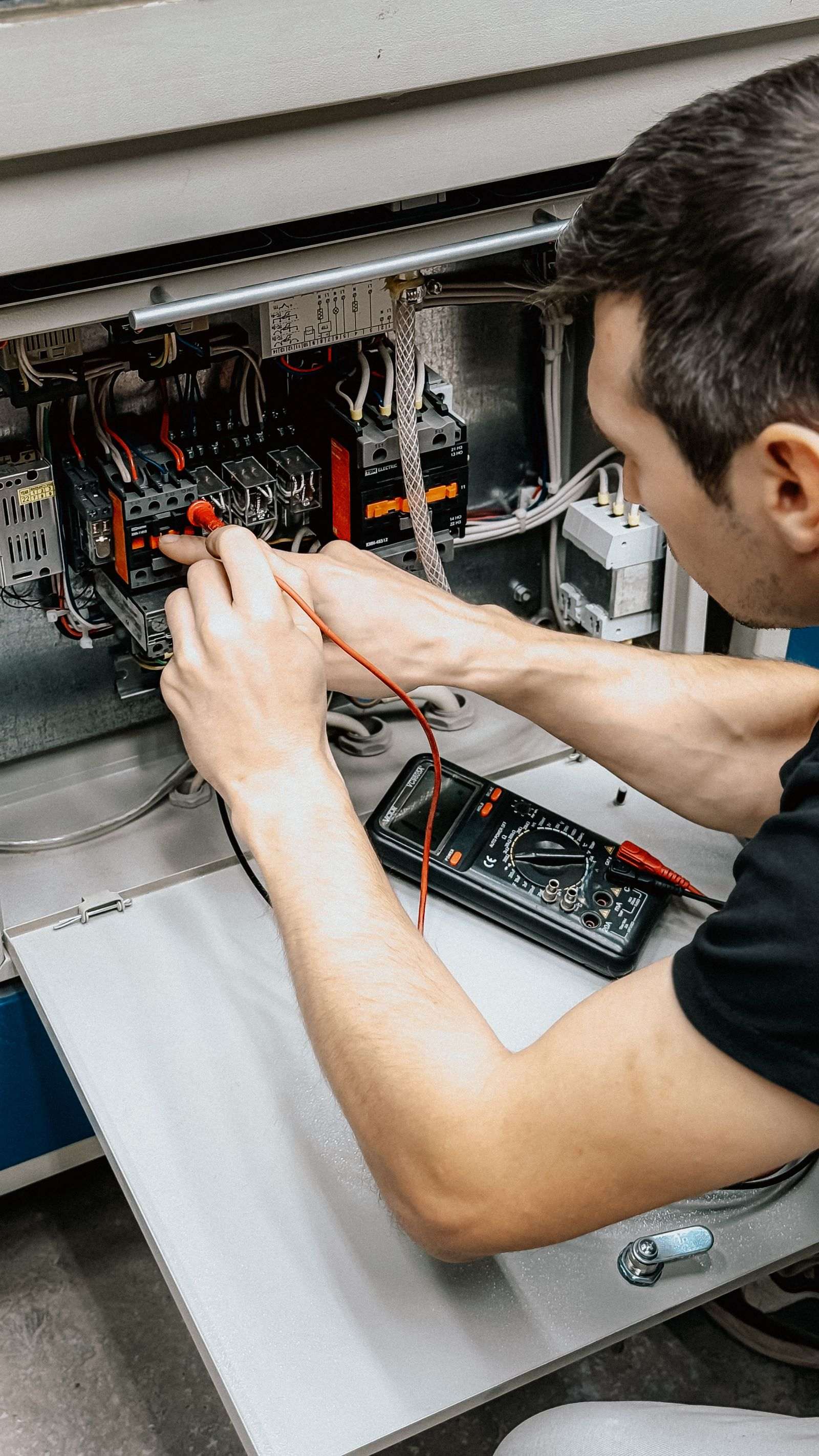
A web search is not a knowledge base
Most AI tools answer a diagnostics question the same way they answer any question: they search the web, stitch together what they find, and hand you a confident answer. That works for trivia. It does not work for a washer that will not drain — because a confident wrong answer still costs a part and a second trip.
Max is built differently. It has its own knowledge bases, built on real service manuals — 386 diagnostic cards, with the exact numbers a diagnosis turns on: resistance values, error codes, test procedures. And it keeps learning: the knowledge bases grow as more manuals and diagnostic cases are added. It is not a search engine with a friendly face. It is a library that keeps getting bigger.
Confirmed or unconfirmed — the label is the point
Every answer Max gives carries a label:
- Confirmed — from a manual, with exact numbers and a source you can check.
- Unconfirmed — an idea to verify by measurement. A hypothesis, not a fact, and marked as one.
Most AI tools do not tell you which kind of answer you just got. Handled tells you on every answer, so you check the right thing with the meter instead of replacing the wrong part.
The nearest analogue, honestly
ServiceTitan's Field Pro AI is the closest thing among the big tools: technicians ask Atlas about equipment manuals, diagnostics or parts mid-job. But no confirmed/unconfirmed labelling was found at ServiceTitan — and ServiceTitan itself warns that Atlas "may be wrong" and that answers should be verified before acting. A warning is honest. A label on every answer is better: it tells you which answers need the warning and which do not. No other competitor was found to identify parts from photos — checked 2026-11-11.
Photo part ID
Photograph a part or a nameplate and Max recognises the part number. The photograph becomes the search — and the part number goes straight into the parts search and the client card.
What to ask before you trust an AI diagnosis
- Does it show its source? If it cannot show the manual, the number and the label, it is a guess with good formatting.
- Does it tell you what is certain and what is not? A tool that marks nothing unconfirmed is a tool that never doubts itself — and it should.
- Does it know the trade, or does it search the web? A knowledge base built on real manuals is not the same as a search box.
- Does it learn? A diagnostics tool that never learns is a tool that will give you the same wrong answer next year.
How Handled approaches it
Max diagnoses from its own knowledge bases — real service manuals, 386 diagnostic cards — and keeps learning. Every answer carries a confirmed or unconfirmed label. Read Diagnostics & photo part ID and Max agent.
Features checked 2026-11-11. Sources: the vendor pricing and features pages for ServiceTitan and the other competitors.
Questions
You know it from the source. A confirmed answer comes from a real service manual, with exact numbers you can check. An unconfirmed answer is an idea to verify by measurement — and Handled marks it as one.
No. Max has its own knowledge bases, built on real service manuals, and it keeps learning. It does not search the web for answers.
Confirmed comes from a manual, with exact numbers and a source. Unconfirmed is an idea to verify by measurement — and it is marked as one, so you check it with the meter instead of replacing the wrong part.
See also: The best CRM for an appliance repair business · How to track parts inventory and van stock · AI for appliance repair · Diagnostics · Max agent · Pricing · Roadmap